

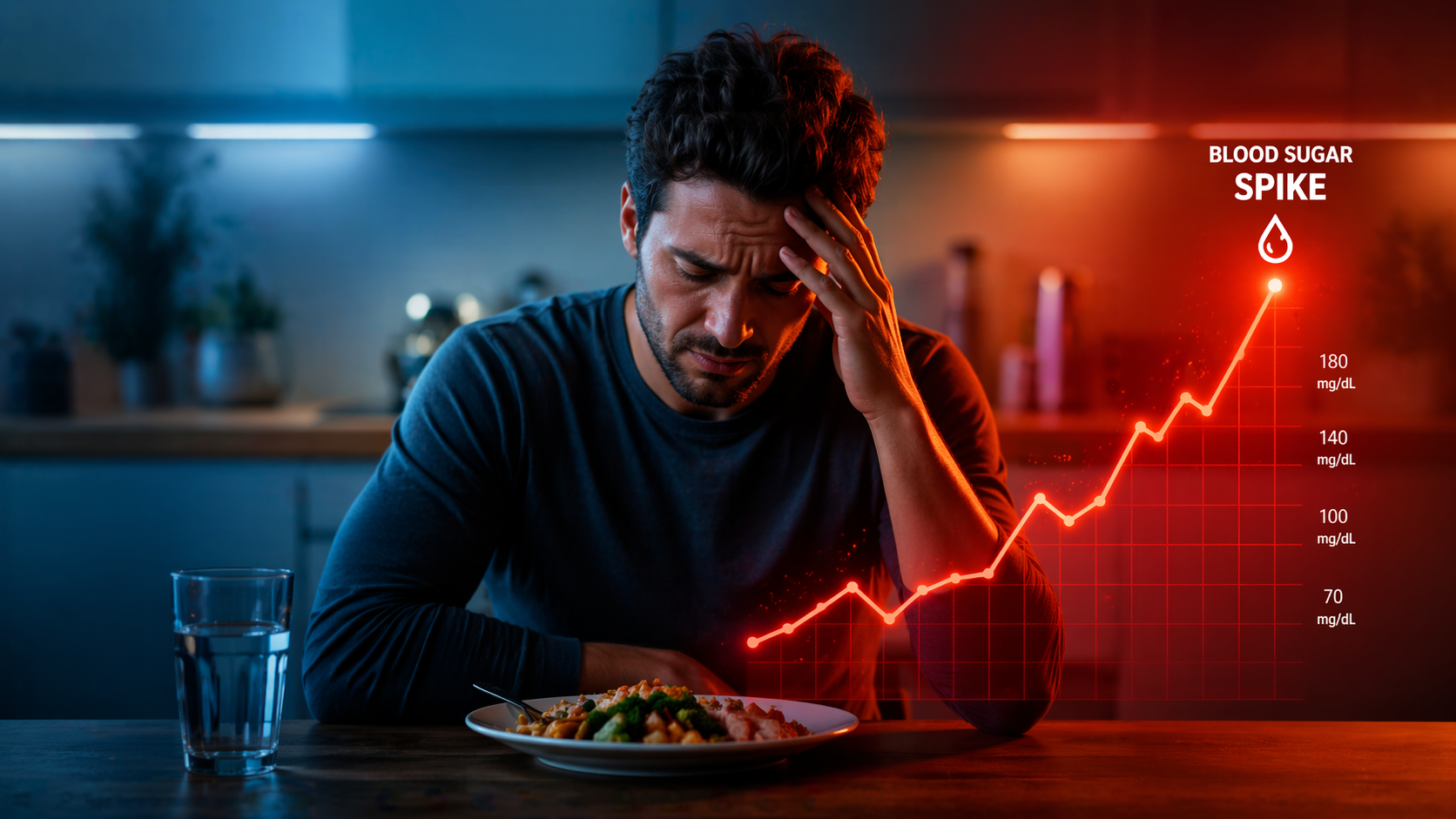
Blood Sugar Spikes After Eating: What’s Really Happing Inside Your Body
Blood sugar spikes after eating are not just a minor fluctuation — they are a warning signal your metabolism is under stress.
Right after you eat, your body breaks down carbohydrates into glucose. This glucose enters your bloodstream, and your pancreas releases insulin to help move that sugar into your cells for energy.
In a healthy system, this process is smooth and controlled.
But when blood sugar spikes after eating become frequent or extreme, it means your body is struggling to manage glucose efficiently.
🔍 What a Normal Response Looks Like
After a balanced meal:
- Blood sugar rises gradually
- Insulin responds efficiently
- Glucose enters cells smoothly
- Energy remains stable
You feel:
- Focused
- Energized
- Mentally clear
⚠️ What a Spike Looks Like
With poor metabolic control:
- Glucose rises rapidly
- Insulin response is delayed or excessive
- Blood sugar crashes afterward
You may feel:
- Sudden fatigue
- Brain fog
- Sugar cravings
- Irritability
These are classic glucose spike symptoms Recognizing unstable blood sugar warning signs you should never ignore helps you take action before it worsens.
🚨 Why This Matters More Than You Think
Repeated blood sugar spikes after eating can lead to:
- Increased fat storage
- Energy crashes throughout the day
- Hormonal imbalance
- Early signs of insulin resistance
Read insulin resistance information from Mayo Clinic to understand the broader metabolic impact.
Over time, this pattern becomes one of the root causes of blood sugar spikes turning into chronic metabolic dysfunction.
🧠 The Hidden Problem
Most people don’t realize they’re experiencing a post meal blood sugar spike because symptoms feel “normal.”
But “normal” doesn’t mean healthy.
If your energy crashes after meals, your body is already signaling a deeper issue.

1. Refined Carbohydrates: The Fastest Trigger for Blood Sugar Spikes
One of the most overlooked causes of blood sugar spikes is the excessive intake of refined carbohydrates.
These include:
- White bread
- Sugary cereals
- Pastries
- Processed snacks
Unlike whole foods, refined carbs digest extremely fast. This leads to a rapid release of glucose into your bloodstream — the main reason blood sugar spikes after eating happen so aggressively.
⚠️ What Actually Happens
When you consume refined carbs:
- Glucose floods your bloodstream quickly
- Your body releases a large amount of insulin
- Blood sugar drops sharply afterward
This cycle creates repeated high blood sugar after eating, follow blood sugar management guidance from CDC to better understand long-term control.
🚨 Why It’s Dangerous
Frequent spikes caused by refined carbs can:
- Increase insulin resistance
- Promote fat storage
- Damage metabolic flexibility
Over time, this becomes one of the major insulin resistance causes that disrupt your long-term health.
2. Eating Carbs Without Protein or Fat
Another major reason behind blood sugar spikes after eating is poor meal composition.
If your meal is mostly carbohydrates without:
- Protein
- Healthy fats
your body absorbs glucose much faster than it can regulate.
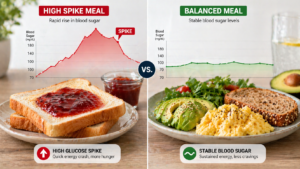
🔍 Why Balance Matters
Protein and fats slow down digestion.
Without them:
- Glucose enters the bloodstream rapidly
- Insulin response becomes unstable
- You experience a stronger post meal blood sugar spike
🧠 Real-World Example
Compare these two meals:
❌ White toast + jam
✔️ Eggs + avocado + whole grain toast
The second option slows glucose release and helps stabilize blood sugar naturally. Learn how to stabilize blood sugar naturally with proven daily strategies.
⚡ The Hidden Pattern
Many people eat “healthy” but still face blood sugar spikes after eating because they ignore food combinations.
It’s not just what you eat — it’s how you combine it.
3. Insulin Resistance: The Silent Driver Behind Repeated Spikes
One of the most serious causes of blood sugar spikes is developing insulin resistance — and most people don’t even know they have it.
Insulin’s job is simple: move glucose from your bloodstream into your cells.
But when your body becomes resistant:
- Cells stop responding properly
- Glucose stays in the blood longer
- Your body produces more insulin to compensate
This leads to repeated blood sugar spikes after eating, even if your diet isn’t extremely poor.
⚠️ Early Warning Signs
Common glucose spike symptoms linked to insulin resistance include:
- Fatigue after meals
- Increased belly fat
- Constant hunger
- Brain fog
These signs are often ignored — but they point directly to deeper insulin resistance causes.
🚨 Why It Gets Worse
The more spikes you experience:
- The more insulin your body releases
- The more resistant your cells become
This creates a dangerous cycle of high blood sugar after eating that becomes harder to control over time.
4. Chronic Stress and Cortisol Imbalance
Even if your diet is clean, stress alone can trigger blood sugar spikes after eating.
When you’re stressed, your body releases cortisol — a hormone that raises blood sugar to prepare for “fight or flight.”
🔍 What Stress Does to Your Body
High cortisol levels:
- Increase glucose production
- Reduce insulin sensitivity
- Make it harder to regulate blood sugar
This leads to frequent post meal blood sugar spike patterns, even from normal meals.

🧠 The Hidden Impact
You might be eating well, but still experiencing blood sugar spikes after eating because your body is in a constant stress state.
That’s why stress management is not optional — it’s metabolic control.
5. Lack of Physical Activity After Meals
One of the most underestimated causes of blood sugar spikes is staying inactive after eating.
Your body is designed to use movement to regulate glucose. When you sit immediately after meals:
- Glucose stays in the bloodstream longer
- Muscles don’t absorb sugar efficiently
- Insulin response becomes weaker
This directly contributes to blood sugar spikes after eating.
🔍 What Movement Actually Does
Light activity after meals:
- Helps muscles absorb glucose
- Reduces insulin demand
- Improves metabolic efficiency and how to improve energy metabolism naturally
Even a 10–15 minute walk can significantly reduce a post meal blood sugar spike.
⚠️ The Sedentary Trap
Modern habits:
- Sitting after meals
- Working at a desk
- Scrolling on phones
All of these increase the chances of high blood sugar after eating, even if your diet is relatively clean.
🧠 Simple Fix
✔️ Walk after meals
✔️ Avoid lying down immediately
✔️ Stay lightly active
These small changes help stabilize blood sugar naturally without drastic effort.
6. Poor Sleep Quality and Disrupted Rhythms
Sleep is one of the most ignored insulin resistance causes — yet it directly affects how your body handles glucose.
When you don’t sleep properly:
- Insulin sensitivity drops
- Hormones become imbalanced
- Glucose control weakens
This leads to stronger blood sugar spikes after eating, especially the next day.
⚠️ What Poor Sleep Triggers
Lack of sleep can cause:
- Increased hunger
- Cravings for sugary foods
- Higher cortisol levels
All of these contribute to repeated glucose spike symptoms.
🚨 The Compounding Effect
Poor sleep + bad diet + inactivity =
A perfect setup for chronic blood sugar spikes after eating.
7. Hidden Sugars in “Healthy” Foods
One of the most deceptive causes of blood sugar spikes is hidden sugar in foods marketed as “healthy.”
These include:
- Flavored yogurt
- Granola bars
- Smoothies
- Packaged “low-fat” foods
They often contain added sugars that rapidly increase glucose levels, leading to blood sugar spikes after eating.
⚠️ Why This Is Dangerous
You think you’re eating clean, but:
- Sugar content is still high
- Fiber is often low
- Absorption is fast
This creates repeated high blood sugar after eating without obvious warning.
🧠 Smart Adjustment
✔️ Choose whole foods
✔️ Read ingredient labels
✔️ Avoid hidden sugars
This alone can reduce frequent glucose spike symptoms.
8. Eating Too Frequently (Constant Snacking)
Another overlooked trigger is eating too often.
Every time you eat:
- Blood sugar rises
- Insulin is released
If you’re constantly snacking, your body never gets a break — leading to continuous blood sugar spikes after eating.
🔍 What Happens Over Time
Frequent eating:
- Keeps insulin elevated
- Reduces metabolic flexibility
- Increases fat storage
This pattern becomes one of the major insulin resistance causes.
⚡ Better Approach
✔️ Space meals properly
✔️ Avoid unnecessary snacking
✔️ Let insulin levels reset
This helps stabilize blood sugar naturally throughout the day.

9. Poor Meal Timing (Late-Night Eating)
Eating late at night is a hidden driver of blood sugar spikes after eating.
At night:
- Insulin sensitivity is lower
- Digestion slows down
- Glucose control weakens
🚨 Why Timing Matters
Late meals can cause:
- Higher overnight glucose levels
- Fat storage increase
- Disrupted metabolic rhythm
This leads to repeated post meal blood sugar spike issues the next day.
🧠 Simple Fix
✔️ Eat earlier in the evening
✔️ Avoid heavy late meals
✔️ Maintain a consistent eating schedule
How to Fix Blood Sugar Spikes After Eating (Fast & Effectively)
Now that you understand the real causes of blood sugar spikes, the focus shifts to correction.
You don’t need extreme diets. You need controlled, consistent adjustments.
✔️ 1. Balance Every Meal
Always combine:
- Protein
- Healthy fats
- Fiber-rich carbs
This slows digestion and prevents sharp blood sugar spikes after eating.
✔️ 2. Move After Meals
A simple habit:
- 10–15 minute walk
This reduces post meal blood sugar spike by helping your muscles absorb glucose efficiently.
✔️ 3. Prioritize Sleep & Stress Control
Fixing sleep and reducing stress directly improves insulin sensitivity and reduces high blood sugar after eating.
✔️ 4. Avoid Hidden Sugars
Cut processed “health” foods and focus on whole, nutrient-dense meals to stabilize blood sugar naturally.
✔️ 5. Support Your Metabolism Strategically
If you’re consistently experiencing blood sugar spikes after eating, lifestyle alone may not be enough.
That’s where structured support becomes important.
👉 Explore your main guide here:
/recommended/metabolic-blood-sugar-support-programs/
This connects your symptoms to proven solutions and strengthens your metabolic control.
Final Takeaway
Blood sugar spikes after eating are not random.
They are signals.
Signals that your:
- Diet
- Lifestyle
- Metabolic health
need adjustment with the best metabolic blood sugar support programs.
Ignoring them leads to deeper issues. Fixing them early restores energy, focus, and long-term health stability.