


🧠 Glucose Balance Lifestyle: A Clear, Sustainable Approach
Maintaining steady glucose levels is not about quick fixes or rigid rules. A glucose balance lifestyle focuses on consistent daily habits that support how the body manages energy over time. Rather than emphasizing extremes, this approach looks at how nutrition, movement, sleep, and stress patterns work together to influence metabolic stability.
At Vital Growth Hub, lifestyle guidance is viewed through an evidence-aware lens. The goal is not to promise outcomes, but to help readers understand how everyday choices may influence long-term balance in a practical and sustainable way.
This approach fits within the broader framework of structured metabolic blood sugar support programs designed to support long-term metabolic stability.
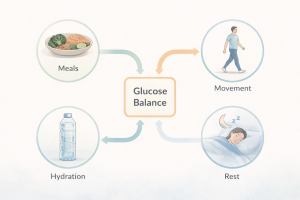
Understanding Glucose Balance in Daily Life
Glucose plays a central role in how the body fuels itself. After meals, glucose enters the bloodstream and is distributed to cells for energy use or storage. A glucose balance lifestyle emphasizes habits that support this process without placing excessive strain on the body.
When daily routines are inconsistent—such as irregular meals, prolonged inactivity, or disrupted sleep—the body may need to work harder to maintain equilibrium. Over time, lifestyle structure becomes an important consideration for maintaining blood sugar balance in a steady, predictable way.
Readers looking for a broader explanation of metabolic processes can explore our metabolic health guides for additional context.
Nutrition Patterns That Support Glucose Balance
Food choices influence how glucose enters and moves through the body. Rather than focusing on restriction, a balanced eating pattern emphasizes consistency, portion awareness, and nutrient variety.
Meals that combine carbohydrates with fiber, protein, and fats tend to support steadier glucose responses. Spacing meals evenly throughout the day may also reduce large fluctuations. Within a glucose balance lifestyle, nutrition is not about perfection, but about creating repeatable patterns that feel sustainable.
Movement as a Daily Regulator
Physical activity supports how the body uses glucose for energy. This does not require intense exercise routines. Walking, stretching, or light resistance activities can all play a role.
A glucose balance lifestyle benefits from regular movement distributed throughout the day rather than isolated activity sessions. Short walks after meals or standing breaks during sedentary periods may contribute to maintaining blood sugar balance in a practical, accessible way.
Sleep and Glucose Regulation
Sleep is often overlooked in discussions about metabolic routines. Irregular or insufficient sleep can influence how the body processes glucose the following day.
Prioritizing consistent sleep and wake times supports overall metabolic health. In a structured glucose balance lifestyle, sleep is treated as a foundational habit rather than an afterthought. Evening routines that limit stimulation and encourage rest may help maintain more predictable energy patterns.
Stress Management and Lifestyle Stability
Stress can influence glucose dynamics through hormonal pathways. While stress is unavoidable, how it is managed can shape daily balance.
Simple stress-reduction practices—such as breathing exercises, light movement, or structured breaks—support emotional and physical regulation. A glucose balance lifestyle recognizes stress management as part of the broader system, not a separate wellness task.
Meal Timing and Consistency
Beyond food choices, timing plays a role in blood sugar balance. Skipping meals or eating at inconsistent times may lead to irregular energy patterns.
Establishing a routine for meals and snacks helps create predictability. This consistency supports the body’s internal rhythms and complements other aspects of metabolic health, such as sleep and activity cycles.
Hydration and Metabolic Processes
Hydration supports many metabolic processes, including nutrient transport and cellular function. While water alone does not regulate glucose, adequate hydration contributes to overall system efficiency.
Within a glucose balance lifestyle, hydration is treated as a supportive habit rather than a solution. Regular water intake throughout the day complements nutrition and movement routines.
Long-Term Lifestyle Sustainability
The most effective routines are the ones that can be maintained. A glucose balance lifestyle emphasizes flexibility and long-term practicality over rigid plans.
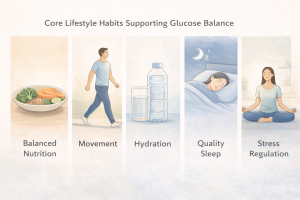
Rather than tracking every variable, many individuals benefit from focusing on a few core habits: regular meals, daily movement, consistent sleep, and manageable stress routines. Over time, these patterns may support steadier blood sugar balance without added pressure.
Lifestyle Consistency and Long-Term Balance
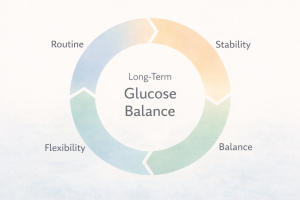
One of the most overlooked aspects of glucose balance is consistency over time. While individual habits matter, their long-term pattern often has a greater influence than any single choice. A stable daily structure helps the body anticipate energy needs and respond more efficiently to routine inputs such as meals, movement, and rest.
In a glucose balance lifestyle, consistency does not mean rigidity. Instead, it refers to maintaining broadly predictable routines that reduce unnecessary stress on metabolic processes. For example, eating meals within similar time windows, engaging in regular low-intensity activity, and preserving a steady sleep schedule can collectively support balance without requiring strict control.
Lifestyle habits also tend to interact. Disrupted sleep may affect appetite regulation the following day, while prolonged stress can influence movement patterns or meal timing. When routines are aligned, these interactions are often smoother and easier to manage.
Over time, small, repeatable habits are generally more sustainable than short-term changes. Focusing on gradual alignment rather than immediate outcomes allows individuals to build routines that feel practical and adaptable within real life. This long-term perspective supports steady balance without creating pressure or unrealistic expectations.
Connecting Lifestyle Habits to Broader Metabolic Health
Lifestyle habits rarely operate in isolation. Nutrition, activity, sleep, and stress patterns influence one another. When aligned, they support broader metabolic health in a balanced and integrated way.
For readers seeking deeper insight into structured approaches, exploring broader metabolic guidance can provide additional context beyond daily habits.
👉 For a comprehensive overview, see our main resource on metabolic blood sugar support programs.
Final Thoughts on a Glucose Balance Lifestyle
A glucose balance lifestyle is not about chasing perfect numbers or outcomes. It is about building steady routines that support how the body manages energy across days, weeks, and years.
By focusing on consistency, flexibility, and evidence-aware habits, individuals can explore lifestyle patterns that align with sustainable wellness goals—without pressure, hype, or exaggerated promises.
Educational resources from the National Institute of Diabetes and Digestive and Kidney Diseases describe how lifestyle patterns influence glucose balance over time.