

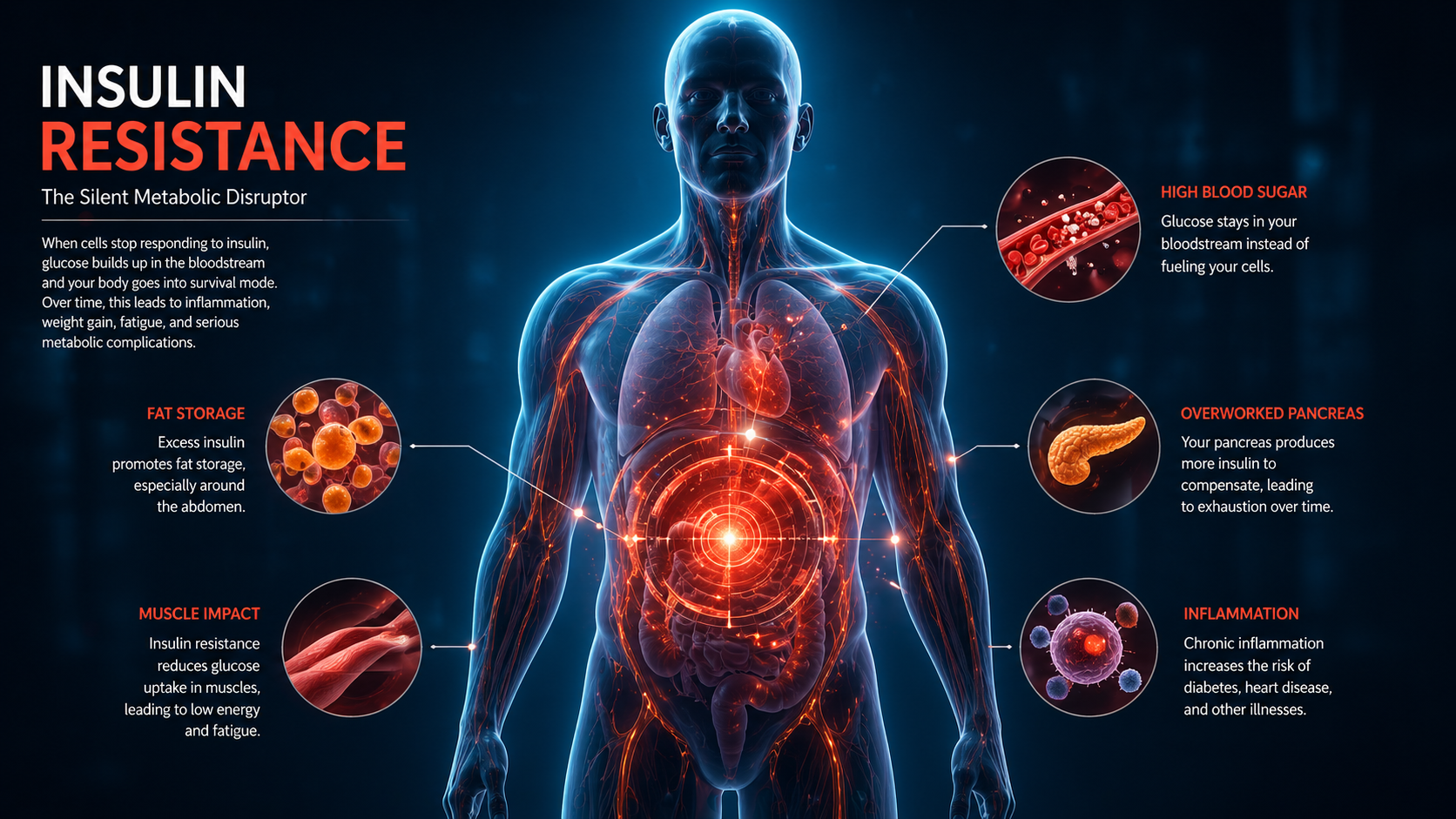
The Warning Signs You’re Probably Ignoring
Most people don’t wake up one day and realize something is wrong with their metabolism. It doesn’t work like that. Instead, the body sends quiet signals—small, almost invisible changes that are easy to ignore. And that’s exactly why insulin resistance symptoms often go unnoticed until they start affecting your energy, weight, and overall health.
You might feel tired even after a full night’s sleep, often linked to low energy levels causes. You may notice unusual cravings, especially for sugar or refined carbs. Or maybe your weight is slowly increasing despite not changing much in your routine. These are not random issues. They are often early signs of insulin resistance—a condition where your body stops responding properly to insulin, the hormone responsible for regulating blood sugar.
What makes this more dangerous is how normal these symptoms feel. Fatigue gets blamed on a busy schedule. Cravings are dismissed as lack of discipline. Weight gain is often attributed to aging. But underneath all of this, your metabolism may already be struggling.
Understanding these early insulin resistance symptoms is not about fear—it’s about awareness. When you catch these signals early, you have the opportunity to correct course before things escalate into more serious conditions like type 2 diabetes or chronic metabolic issues.
In this guide, you’ll discover the most overlooked early signs of insulin resistance, explained in a way that actually makes sense. No complicated medical jargon. Just clear, practical insights so you can recognize what your body is trying to tell you—before it’s too late.

What Insulin Resistance Actually Means (Simplified)
To understand why these insulin resistance symptoms matter, you need a clear picture of what’s actually happening inside your body. No complex science—just the truth in simple terms.
Your body uses insulin to move sugar (glucose) from your bloodstream into your cells, where it’s used for energy. Think of insulin as a key. It unlocks your cells so glucose can enter and fuel your body.
Now here’s the problem.
When you develop insulin resistance, your cells stop responding properly to that key. The door doesn’t open as easily. So your body reacts by producing more insulin to force the process. Over time, this creates a cycle—higher insulin levels, poor glucose control, and gradually worsening metabolic function.
This is where early insulin resistance symptoms begin to show up.
Instead of steady energy, you get spikes and crashes. Instead of feeling satisfied after meals, you feel hungry again quickly. Instead of burning fat efficiently, your body starts storing it—especially around the abdomen.
Many people experiencing these signs of insulin resistance don’t realize what’s happening because nothing feels extreme at first. It’s subtle. Gradual. Easy to ignore.
But underneath, your metabolism is already shifting.
This condition doesn’t just affect blood sugar. It impacts:
- Energy production
- Fat storage
- Hormonal balance
And if left unchecked, these insulin resistance symptoms can quietly progress into more serious metabolic problems.
That’s why recognizing the early warning signs is critical—not later, not after diagnosis, but now.

7 Early Signs of Insulin Resistance You Should Never Ignore
Now we get to what actually matters—the real, observable insulin resistance symptoms your body shows long before any diagnosis.
These are not random. They follow patterns.
1. Constant Fatigue (Even After Rest)
You wake up tired. Midday crashes hit hard. This is one of the most common early signs of insulin resistance because your cells aren’t getting steady energy.
2. Intense Sugar Cravings
If you constantly crave sweets or carbs, it’s not just habit. Your body is struggling to regulate glucose, leading to repeated hunger signals—classic insulin resistance warning signs.
3. Belly Fat That Won’t Go Away
Stubborn fat around the abdomen is strongly linked to high insulin levels. Among all signs of insulin resistance, this is one of the most visible.
4. Brain Fog and Poor Focus
Difficulty concentrating, forgetfulness, or mental fatigue often point to unstable blood sugar levels—one of the overlooked insulin resistance symptoms.
5. Frequent Hunger (Even After Eating)
You eat, feel full briefly, then get hungry again. This happens because your body isn’t efficiently using glucose.
6. Energy Crash After Meals
If you feel sleepy or sluggish after eating, especially carbs, it’s a strong indicator of blood sugar spikes after eating
7. Skin Changes (Dark Patches or Tags)
Darkened skin around the neck or small skin tags can signal high insulin symptoms—a physical sign many people ignore.
Individually, these may seem harmless. Together, they form a pattern.
And that pattern is exactly how insulin resistance symptoms begin to take control—quietly, but progressively.

Hidden Signs Most People Completely Overlook
The obvious insulin resistance symptoms get attention. But the real danger lies in the ones people ignore because they don’t seem connected.
These are the silent signals.
1. Mood Swings and Irritability
Sudden mood changes, irritability, or feeling mentally unstable throughout the day often trace back to unstable blood sugar. These subtle early signs of insulin resistance are usually misdiagnosed as stress or burnout.
2. Low Energy in the Morning
You wake up feeling exhausted instead of refreshed. This isn’t normal. It’s often linked to poor overnight glucose regulation—one of the more hidden insulin resistance warning signs.
3. Difficulty Losing Weight (Despite Effort)
You’re eating better. Maybe even exercising. Yet nothing changes. This often connects to causes of slow energy metabolism
4. Increased Waist Size Without Clear Reason
Even without major weight gain, your waistline expands. This reflects deeper metabolic dysfunction signs happening internally.
5. Hormonal Imbalances
Irregular cycles, low libido, or unexplained hormonal shifts often connect back to insulin signaling issues. These are advanced but still early-stage insulin resistance symptoms.
6. Constant Mental Fatigue
Not just physical tiredness—mental exhaustion. Difficulty thinking clearly, low motivation, and lack of drive are often overlooked blood sugar imbalance symptoms.
7. Cravings Late at Night
Strong evening cravings are not random. They reflect poor glucose control throughout the day—another quiet but telling signal.
These signs don’t scream for attention.
But when combined with earlier symptoms, they form a clear picture: your body is already under metabolic stress.
Ignore them, and the problem compounds.
Why Insulin Resistance Happens (The Real Root Causes)
Understanding why these insulin resistance symptoms appear is what separates guesswork from control.
This condition doesn’t happen overnight. It builds slowly through daily habits, repeated patterns, and metabolic stress.
Here are the core drivers behind most signs of insulin resistance:
1. High Sugar and Refined Carb Intake
Frequent consumption of sugary foods, processed snacks, and refined carbs forces your body to release insulin repeatedly. Over time, your cells become less responsive—leading directly to insulin resistance symptoms.
2. Sedentary Lifestyle
When your body isn’t moving, it doesn’t use glucose efficiently. Physical inactivity reduces insulin sensitivity, making it easier for insulin resistance warning signs to develop.
3. Chronic Stress
Long-term stress increases cortisol levels, which directly impacts blood sugar regulation.
Chronic stress increases cortisol levels, which directly impacts blood sugar regulation, as explained in how stress affects blood sugar and insulin. This creates a cycle of imbalance, contributing to hidden blood sugar imbalance symptoms.
4. Poor Sleep Quality
Lack of proper sleep disrupts hormonal balance and reduces your body’s ability to manage glucose effectively. This is one of the most underestimated early signs of insulin resistance triggers.
5. Excess Body Fat (Especially Abdominal)
Fat tissue—particularly around the abdomen—affects how your body responds to insulin. This reinforces the cycle of high insulin symptoms and metabolic dysfunction.
6. Frequent Snacking and Overeating
Constant eating keeps insulin levels elevated throughout the day. Your body never gets a break, accelerating the development of insulin resistance symptoms.
7. Hormonal and Metabolic Imbalance
Underlying hormonal issues can worsen insulin sensitivity, linking multiple metabolic dysfunction signs together.
None of these causes act alone.
They stack. They compound. And over time, they push your body into a state where normal metabolic function becomes harder to maintain.

What To Do Next Before It Gets Worse
Recognizing insulin resistance symptoms early gives you something most people don’t have—time to fix it before it escalates.
But awareness alone changes nothing. Action does.
The goal isn’t extreme dieting or temporary fixes. It’s restoring how your body responds to insulin, step by step.
1. Stabilize Your Blood Sugar
Start by reducing processed sugars and refined carbohydrates. Focus on whole foods that release energy slowly. This directly improves many signs of insulin resistance without drastic changes.
2. Move Your Body Daily
You don’t need intense workouts. Consistent movement—walking, light strength training, or even short activity bursts—can significantly improve insulin sensitivity and reduce insulin resistance symptoms.
3. Prioritize Sleep
Aim for consistent, high-quality sleep. Even small improvements here can regulate hormones and reduce blood sugar imbalance symptoms.
4. Reduce Stress Levels
Chronic stress keeps your body in a constant state of imbalance. Simple practices like breathing exercises, structured routines, or time away from screens can make a measurable difference.
5. Support Your Metabolism Strategically
Lifestyle is the foundation—but in many cases, it’s not enough on its own. Supporting your body with targeted metabolic and blood sugar optimization strategies like metabolic and blood sugar support programs can accelerate progress and help reverse insulin resistance symptoms more effectively.
👉 For a deeper breakdown of proven options, explore:
/recommended/metabolic-blood-sugar-support-programs/
6. Stay Consistent (Not Perfect)
The biggest mistake people make is inconsistency. Small daily improvements outperform short-term intensity every time.
Your body is already giving you signals.
Ignore them—and they get louder.
Act on them—and you regain control.